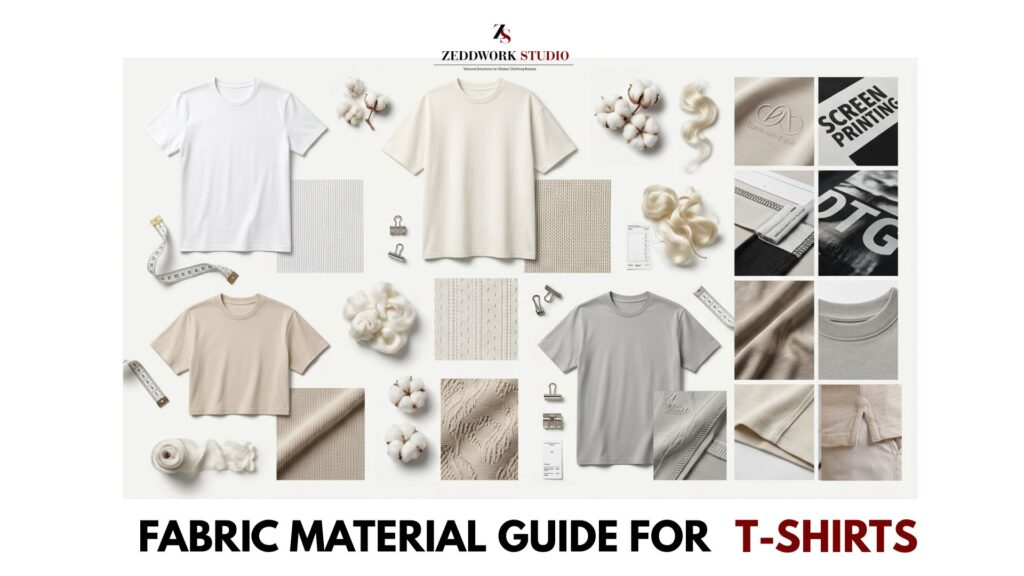
T-shirts are the highest-volume garment in the world — and the most underestimated.
Every brand, retailer, and wholesaler sells them. But the ones that build loyal customers and strong margins are the ones that get the fabric right before they get the logo right. The wrong material means returns, bad reviews, and a product that loses its shape after five washes.
The right material means a garment people reach for first, wear longest, and talk about. This guide breaks down everything that goes into a premium t-shirt — from knit construction and fiber blends to fit engineering and customization methods — so that whether you’re developing your first sample or scaling an existing line, every decision you make is an informed one.
The foundation
Why knit jersey fabrics are the undisputed king of t-shirts
Walk into any wardrobe and pull out a t-shirt. Odds are near certain that it’s made from a knit jersey fabric — and for very good reason. Unlike woven fabrics (think dress shirts or denim), knit fabrics are constructed by interlocking loops of yarn, which gives them a unique set of properties that make them perfect for next-to-skin comfort.
Jersey knit fabric stretches naturally in multiple directions without any added spandex. It moves with your body, recovers its shape, and drapes softly over contours. It breathes well because the looped structure allows air circulation, making it ideal for year-round wear. It’s also forgiving in fit — a small amount of stretch covers a range of body shapes in a way a rigid woven fabric simply cannot.
For a clothing brand, jersey is the smart choice: it’s cost-effective to produce at scale, takes dye exceptionally well for vibrant colorways, and holds printed graphics without cracking or peeling as quickly as stiffer substrates. The fabric itself communicates softness and approachability before the customer even reads the tag.
“The best brands don’t just sell a print — they sell the feeling of putting the shirt on. That feeling starts with the fabric.”
Knit constructions
The four key knit types for t-shirts
Not all jersey is the same. The way the loops are knitted determines the weight, texture, opacity, and drape of the final fabric. Here are the four constructions you’ll encounter most when specifying a t-shirt.
Single jersey
The classic t-shirt fabric. Knitted in one layer with a smooth face and a slightly textured reverse. Lightweight, breathable, and affordable. Ideal for everyday basics, graphic tees, and entry-level streetwear.
Interlock
Two layers of single jersey knitted together, creating a double-sided smooth fabric. Heavier and more stable than single jersey — it doesn’t curl at the edges and holds its shape wash after wash. Premium feel, excellent for fitted styles.
Pointelle
A delicate knit featuring small, decorative eyelet holes in a repeating pattern. Adds texture and a feminine, crafted aesthetic. Frequently used in women’s t-shirts and lightweight layering pieces for fashion-forward brands
.
Jacquard
Patterns or designs are knitted directly into the fabric structure itself using a jacquard loom — not printed or embroidered on top. Creates rich, textured surfaces with tonal or multicolour designs.
Knit constructions
Choosing the right fiber for your t-shirt
The knit construction tells you how fabric is built. The fiber tells you how it feels, performs, and ages. The most common options for t-shirts sit on a spectrum from natural to synthetic, each with genuine trade-offs.
100% Cotton
The gold standard for t-shirts and rightfully so. Cotton is soft against skin, breathes well, absorbs moisture, and takes dye beautifully. Ring-spun cotton — where fibers are twisted longer and finer — produces an even softer hand feel than regular open-end spun. The trade-off is that 100% cotton t-shirts can shrink after washing and may wrinkle more easily. Combed and ring-spun cotton, increasingly common in premium basics, removes short fibers to leave only long, silky strands — a noticeably smoother result.
Cotton-poly blend
Typically 50/50 or 60/40 cotton-to-polyester, these blends balance the comfort of cotton with the durability and wrinkle-resistance of polyester. They hold shape better through repeated washing, dry faster, and tend to be lighter than pure cotton of the same weight. The slight downside is that poly reduces breathability and can feel less natural against skin. Great for athletic-inspired t-shirts, youth markets, and branded merchandise with long-wear demands.
Modal
Modal is a type of rayon derived from beech tree pulp. It’s extraordinarily soft — often described as feeling like a permanent “just-washed” softness — and has a beautiful drape and subtle sheen. Modal is 50% more water-absorbent than cotton, making it an excellent choice for lightweight, luxurious basics. It resists shrinking and pilling better than cotton too. The cost is higher, positioning modal tees in the premium or contemporary fashion segment rather than the mass market.
Cotton-bamboo
Blending cotton with bamboo-derived viscose creates a fabric that is incredibly soft, naturally antibacterial, and temperature-regulating — bamboo fibers have a micro-gap structure that vents heat in summer and retains warmth in cooler conditions. This blend is popular with eco-conscious brands and wellness labels because bamboo grows rapidly without pesticides. Typical blends run 70% bamboo / 30% cotton. It dyes well and drapes beautifully, though it requires gentle washing to preserve the soft hand feel.
Pima and Supima
Pima and Supima cotton represent the top of the cotton quality pyramid. Both are grown from extra-long staple (ELS) cotton fibers — significantly longer than standard cotton — which means the resulting yarn is finer, stronger, and far softer against skin. Supima is simply American-grown Pima, certified and trademarked to guarantee origin and quality standards. The longer fibers translate directly into a fabric that pills less, fades less, and gets softer with every wash rather than rougher. For clothing brands positioning in the premium or luxury segment, Pima or Supima cotton is the material signal that communicates quality before the customer even reads the label.
Making it yours
Ways to customize a t-shirt
Choosing the right blank is only half the story. How you decorate or modify it shapes the brand perception just as much. Each method has a different effect on the fabric’s hand feel, durability, and suitability for production runs.
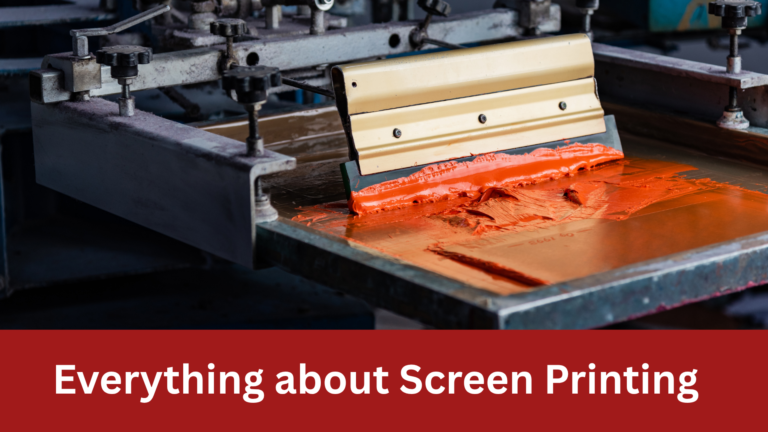
Screen printing
The industry workhorse. Inks are pressed through mesh screens directly onto fabric in the screen printing method.
Bold, opaque colors with excellent wash durability.
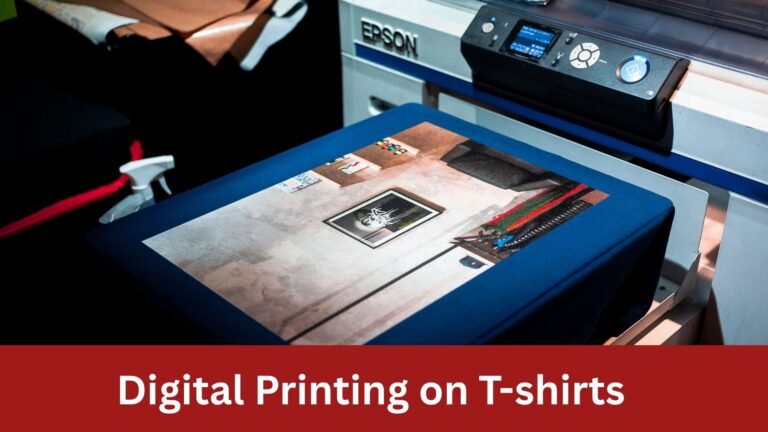
DTG (direct-to-garment)
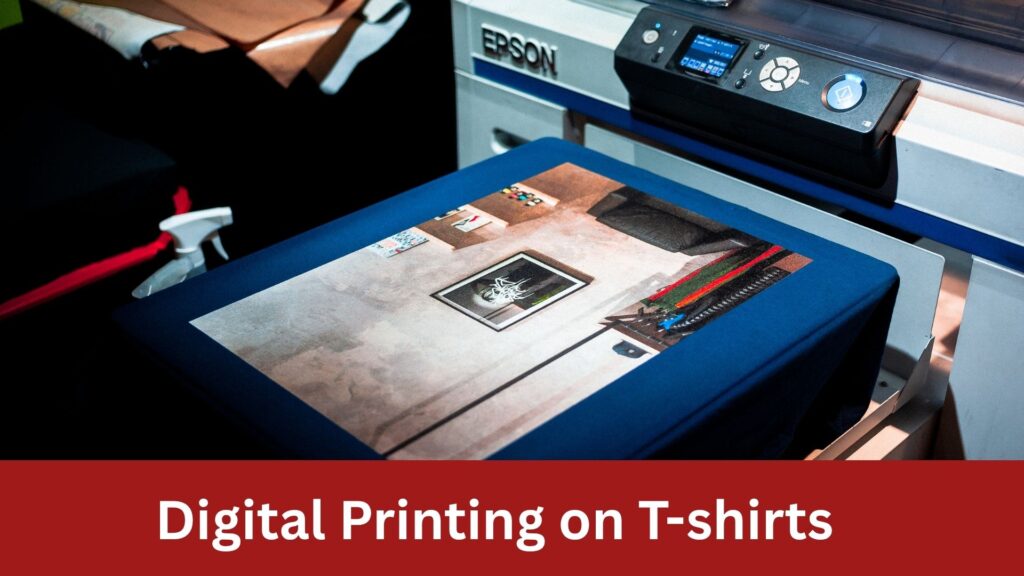
A digital inkjet printer applies ink directly onto the fabric. Ideal for photographic designs, gradients, and small quantities. Digital printing works best on 100% cotton.
Embroidery
Thread stitched directly into the fabric by a machine. Adds a premium, tactile quality. Suits logos, chest pocket hits, and collar branding. Works on all fabric types and weights.
Heat transfer / DTF
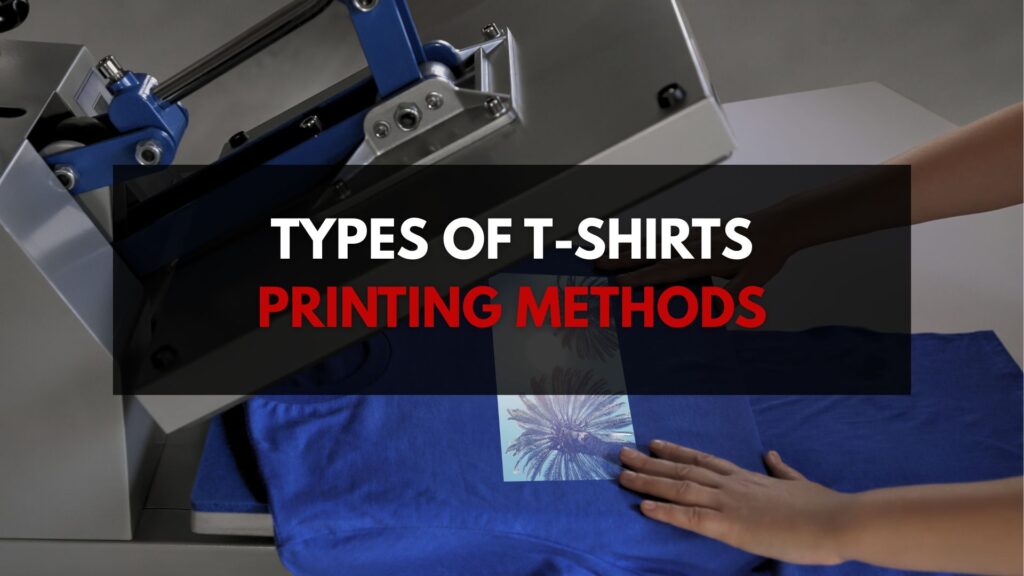
Direct-to-film (DTF) transfers are printed on a special film and heat-bonded to the garment. Versatile across fabric types, including blends and nylon. Good for small runs and designs with fine detail.
Garment dyeing
The finished, sewn garment is dyed as a whole piece. Creates a lived-in, vintage look with natural tonal variation. Popular with streetwear and lifestyle brands chasing an authentic aesthetic.
Patchwork & appliqué
Separate pieces of fabric are stitched onto the garment — woven labels, chenille patches, or cut fabric shapes. Adds dimensionality and a handcrafted feel to limited-edition or premium pieces.
Silhouette
T-shirt fits: which shape works for your brand?
Fit is arguably the single most important decision in a t-shirt’s design. The same fabric in two different fits tells completely different brand stories. Here’s how the core silhouettes differ and when to reach for each.
Regular fit
Classic cut with ease at the chest, waist, and hip. Universal sizing. The benchmark silhouette for branded merchandise, workwear, and everyday basics.
Oversized
Extended shoulders, dropped seam, relaxed throughout the body. Streetwear staple. Size down is common — a single size can cover multiple body types. Favored by contemporary and hype brands.
Longline
Extended hem that falls past the hip, often to mid-thigh. Can be regular or oversized in width. Creates layering opportunities and a fashion-forward proportion. Popular in South Asian and Middle Eastern markets.
Crop / short
Hem sits above the natural waist or at the navel. Strong in women’s and gender-neutral collections. Works in both fitted and boxy (boxy crop) silhouettes. High-impact styling with minimal fabric use.
Cut for the wearer
Men’s, women’s & unisex: what actually changes
The difference between a men’s, women’s, and unisex t-shirt isn’t just about labelling — it reflects meaningful differences in pattern engineering that affect how the garment looks and feels on the body.
Men’s fit
-Straight or slightly tapered torso
-Wider, squarer shoulder placement
-Longer body length
-Wider neck opening
-Larger chest and waist ease
-Sleeve width matched to broader arms
Women’s fit
-Shaped/tapered waist for hourglass silhouette
-Narrower shoulder seam placement
-Shorter body length overall
-Wider hip allowance at hem
-Softer, narrower sleeve
-Smaller neck opening; scoop or V common
Unisex fit
-Straight body with minimal taper
-Shoulder and sleeve sized wider than women’s
-Mid-length torso between men’s & women’s
-Designed to read as relaxed on all bodies
For clothing brands, the choice of fit template has downstream effects on grading (how sizes scale up and down), fabric consumption, and sample development costs. Many brands start with a unisex block and then offer a secondary women’s option once demand is proven — minimizing initial investment while covering the widest market.
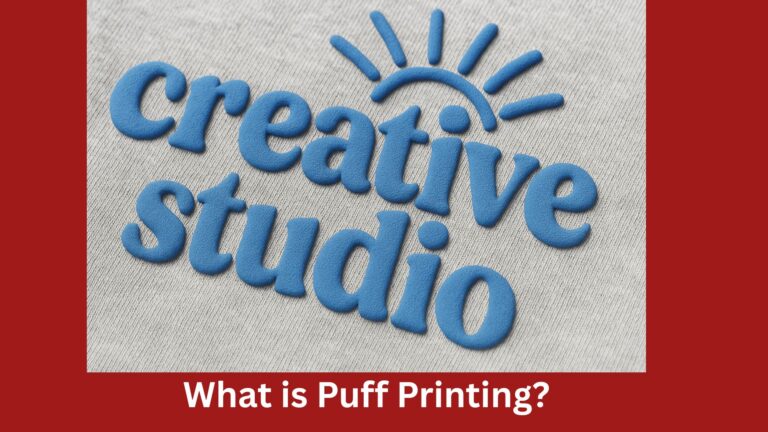
If your streetwear brand is looking for a bold, textured way to make your designs stand out, puff…
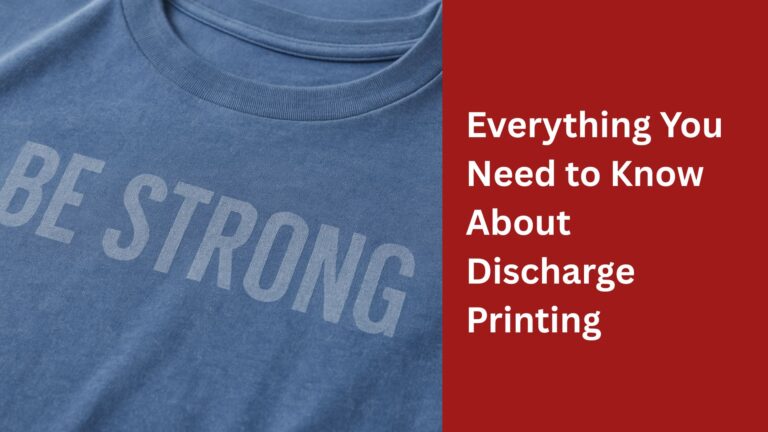
If you’re looking to create soft, vintage-style prints with vibrant colors on dark fabrics…
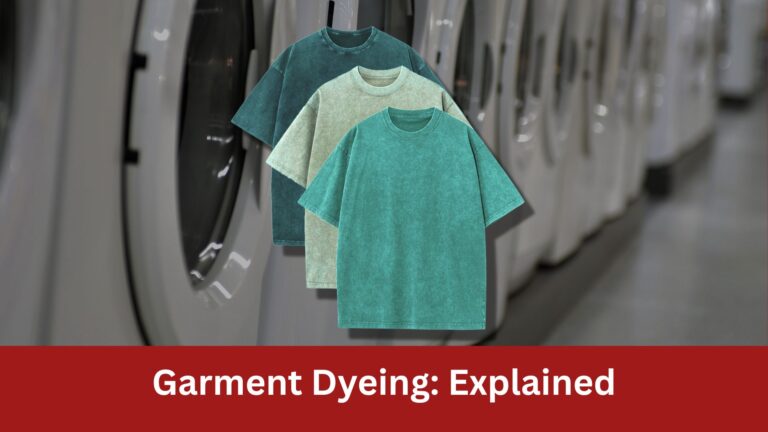
Looking to create vintage-inspired, one-of-a-kind t-shirts, hoodies, or streetwear pieces? Garment…
When it comes to vibrant, bold, and long-lasting prints on t-shirts, hoodies, and streetwear…
If you’ve ever admired bold, vibrant designs on t-shirts, hoodies, or outerwear, chances are they…
Digital printing has transformed the world of custom t-shirts. Whether you’re a designer…