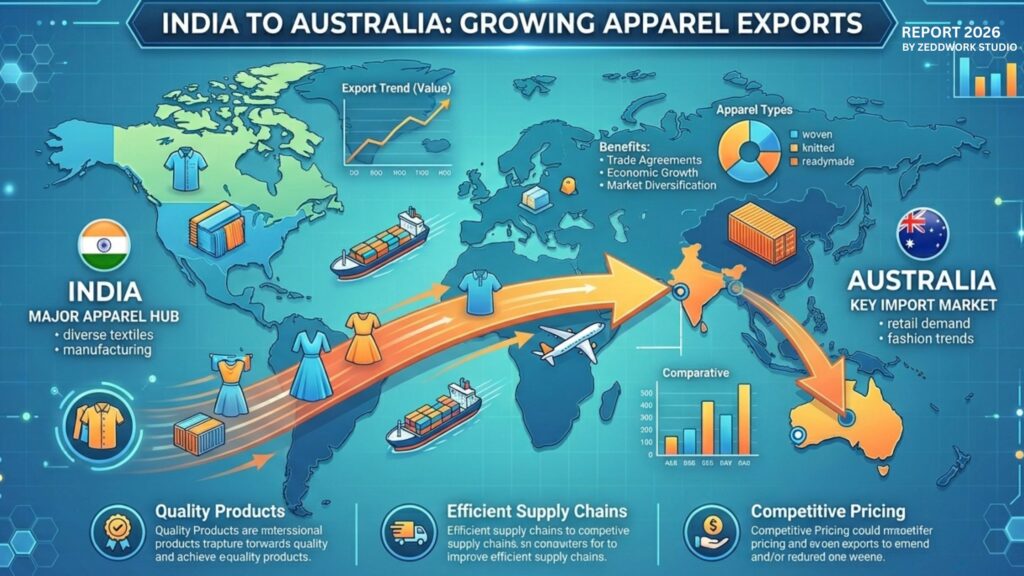
On April 2, 2022, Australia and India signed a trade agreement that quietly rewrote the economics of apparel sourcing, making India the top apparel manufacturing partner for Australian brands.
Most haven’t fully acted on it yet. The brands that do — and do so now — will hold a structural cost advantage their competitors may never close.
The India–Australia Economic Cooperation and Trade Agreement (ECTA), which entered into force on 29 December 2022, is not simply another trade deal. For the apparel and textile sector, it represents the most significant tariff reduction Australia has offered any major manufacturing nation in a generation. Indian-made garments that once attracted duties of 5% to 12% at Australian customs are now entering at zero — or well below previous rates — with further reductions phasing in over the agreement’s schedule.
That is real money. On a $500,000 annual import order, the savings can run to $25,000–$60,000 per year — year after year, compounding as order volumes grow. For a brand carrying thin margins in a competitive Australian retail environment, that is the difference between profit and loss on a product line.
Read the blog by the Department of Foreign Affairs and Trade by the Australian Government here.
But the ECTA story is only half the argument. The deeper case for India is structural: a manufacturing ecosystem that is maturing fast, a compliance culture increasingly aligned with Australian consumer expectations, and a range of capabilities — from basics to hand-crafted couture — that no other single country offers.
The India–Australia ECTA
What the Agreement Actually Does for Australian Apparel Brands
Signed April 2022 · Entered into Force December 29, 2022 · Covering 85%+ of Australian goods and 96% of Indian goods by value.
0%
Duty on majority of Indian apparel & textile categories imported into Australia under ECTA schedules
85%+
Share of Australian imports from India now covered by zero or reduced duty commitments
10yrs
Phase-in timeline for full tariff liberalisation across all eligible HS codes in the agreement
$45B+
Projected bilateral trade target set by both governments under the ECTA framework over the medium term
Reading the ECTA for Apparel Buyers
The ECTA is a comprehensive agreement, but for Australian fashion brands and garment importers, the most relevant provisions fall into three categories: tariff schedules, rules of origin, and customs facilitation.
★ Tariff Schedules for Apparel
Under Australia’s tariff schedule within the ECTA, the majority of HS Chapter 61 (knitted garments), which covers T-shirts, hoodies, pullovers, and children’s garments. and Chapter 62 (woven garments) which covers women’s clothing such as tops, dresses, loungewear, and eveningwear apparel products originating from India are now subject to zero MFN duties.
This is transformative: Australia’s standard MFN tariff on clothing had been 5%, and for some categories, up to 10–12%. The elimination of these duties — effective from the date of entry into force — has made Indian-origin garments materially cheaper than equivalents from non-FTA countries like China, Vietnam, and Bangladesh, which continue to face standard MFN rates.
★ Rules of Origin
To qualify for ECTA preferential rates, garments must meet the agreement’s rules of origin — generally requiring that the product undergo “substantial transformation” in India. For most readymade garments, this means the cutting and sewing (and often the fabric production) must occur within India. This is easily achievable when working with Indian export manufacturers who use domestically produced fabrics — which the vast majority do, given India’s position as one of the world’s largest cotton and textile producers. Your Australian customs broker will require a Certificate of Origin (CoO) from your Indian supplier; any reputable exporter will provide this as standard documentation.
★ Customs Facilitation and Trade Process
The ECTA also includes provisions for customs cooperation, mutual recognition, and simplified documentation. For Australian importers, this means faster clearance, reduced likelihood of arbitrary holds, and a more predictable import process compared to sourcing from countries without an FTA relationship. Over time, as the two customs authorities build their relationship under the agreement, these procedural benefits will compound.
Complete Timeline of ECTA
ECTA Signed
Prime Minister Morrison and Prime Minister Modi sign the India–Australia Economic Cooperation and Trade Agreement in a landmark bilateral ceremony.
ECTA Enters into Force
Tariff reductions take legal effect. Australian importers of Indian garments can immediately claim preferential rates on qualifying HS codes.
Phase 1 Tariff Reductions Complete
First tranche of scheduled tariff reductions phased in across apparel, textile, and home furnishing categories.
Comprehensive FTA Negotiations Continue
The ECTA is an “early harvest” agreement. Full Comprehensive Economic Cooperation Agreement (CECA) negotiations are ongoing, expected to further deepen trade coverage and reduce remaining tariff barriers.
The ECTA is Australia’s most strategically important trade agreement with a major manufacturing nation since the China FTA — and for the apparel sector, it may already be more valuable.”
Zeddwork Studio Trade Analysis · 2025
What India Makes for Australia
The Full Width of India’s Apparel Capability
Understanding what India can actually produce for the Australian market requires looking beyond the stereotypes. India is not one factory type — it is a continent-scale manufacturing system spanning every product category.
In Zeddwork Studio, we primarily work on these three categories:
Men’s Casualwear & Basics
From heavyweight cotton t-shirts and polos to fleece hoodies and relaxed essentials, our collections are developed using premium fabrics, refined fits, and scalable production systems built for growing fashion brands.
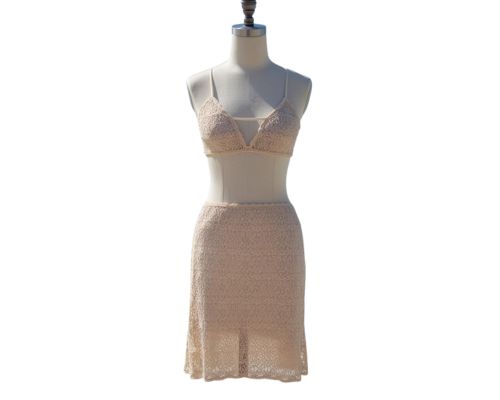
Women’s Fashion
We produce dresses, loungewear, resortwear, and contemporary tops using breathable cottons, linens, textured knits, and artisan detailing — blending effortless silhouettes with premium craftsmanship and design-led manufacturing.
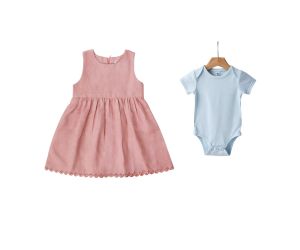
Kid’s clothing
From rompers and babysuits to coordinated playwear sets, our production combines skin-friendly fabrics, safe trims, and high-quality stitching — ideal for Australian lifestyle and childrenswear brands seeking reliable, ethical manufacturing partners.
Why Australian Brands Should Act in 2026, Not 2030
The ECTA has been in force since December 2022. Yet survey data from Australian fashion industry bodies suggests that a significant majority of mid-market brands have not yet restructured their sourcing to take advantage of it. The reasons are familiar: existing supplier relationships, sunk costs in tooling and patterns, reluctance to manage a transition while juggling day-to-day trading pressures.
These are real constraints. But they are also the same constraints your competitors are using as an excuse not to move. The brands that build Indian supply chains now will be three to five years ahead in relationship depth, factory knowledge, and process efficiency by the time the broader market catches up.
The CECA Will Go Further
The ECTA is explicitly an “early harvest” agreement — a fast-tracked subset of a larger Comprehensive Economic Cooperation Agreement (CECA) that both governments are actively negotiating. When the CECA is finalised, it is expected to deepen trade commitments across services, investment, and goods — potentially including apparel categories still subject to partial duties and professional certifications relevant to compliance and sustainability reporting. Brands with established Indian relationships will be first in line to benefit from whatever the CECA unlocks.
India’s PLI-Driven Capacity Expansion
India’s Production Linked Incentive scheme for textiles is channelling substantial government funding into new manufacturing capacity — specifically in man-made fibre fabrics, technical textiles, and performance wear. This is directly relevant to Australian activewear, swimwear, and outdoor apparel brands. Factories being built now under PLI incentives will offer brand-new infrastructure, certifications, and pricing as they ramp up over 2025–2027. Brands building sourcing relationships today will have access to this fresh capacity on preferred terms.
Retail Sustainability Pressure Is Accelerating
Australian consumers are increasingly demanding supply chain transparency. The Australian Fashion Council’s sustainability roadmap, alongside growing scrutiny from Australian Ethical Clothing Australia accreditation schemes, means that brands unable to credibly demonstrate ethical sourcing are facing real commercial risk. India’s compliance infrastructure — GOTS, OEKO-TEX, SEDEX/SMETA, SA8000 — is among the most developed in the manufacturing world, and aligns directly with the certifications Australian ethical retail frameworks recognise and reward.
What Australia Gets from India, Beyond Zero Duties
Craft You Cannot Source Anywhere Else
Hand block printing in Jaipur, chikankari embroidery from Lucknow, Bandhani tie-dye from Rajasthan, Kantha quilting from Bengal — these are living craft traditions with zero equivalent anywhere in South-East Asia or China. For Australian brands competing on distinctiveness and story, India is the only logical source. Learn more about Indian Textile Crafts for Apparels here.
Time Zone Alignment
India Standard Time is 3.5 to 5.5 hours behind Australian east coast time — far closer than the 5.5–8 hour gap with China, and closer still than Bangladesh or Vietnam. This matters for real-time communication: sampling queries, production updates, urgent spec changes. Teams in India and Australia can work the same business day with a 2–3 hour overlap window.
No Forced Labour Risk
Australian brands are increasingly exposed to reputational and legal risk from supply chains with forced labour. Indian factories work in ethical business, fair working conditions and transparent supply chain.
Currency and Pricing Stability
Many Indian exporters, including Zeddwork Studio, invoice in AUD for Australian Brands, removing currency conversion risk and simplifying your accounts payable process entirely. No USD exposure, no exchange rate surprises at settlement.
Low MOQ Access for Growing Brands
One of the biggest barriers for Australian brands scaling from boutique to mid-market is minimum order quantities. While other countire’s factories typically demand 800–1,000 units per style at an acceptable price. Quality Indian export studios — including Zeddwork Studio — work from 300 units per style, enabling brands to test new lines without committing to volume that buries cash flow, for brands who just want to test out our products and services, we also offer a trial production of of just 100 units per style.
A Story Your Customer Wants to Hear
In the Australian market, “made in India” — when it comes with genuine craft provenance, ethical certifications, and supply chain transparency — is an asset, not a liability. Research consistently shows that Australian consumers respond positively to India-origin apparel positioned around craft heritage and ethical manufacturing.
Zeddwork Studio – An Apparel Manufacturing Partner for Australian Brands
Zeddwork Studio is a ready-made garments export studio based in India, working exclusively with international brands who need a partner that speaks their language — commercially, technically, and culturally.
For Australian brands, we offer one thing above all: the confidence that your India sourcing strategy will work — on spec, on time, with the documentation your customs broker, your compliance team, and your sustainability reporting require.