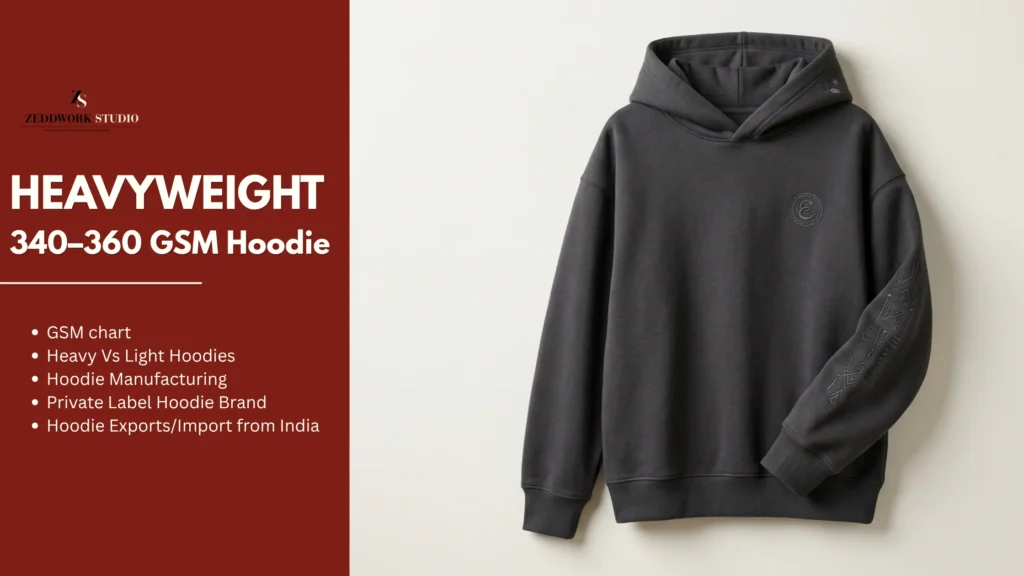
The quality of a premium hoodie begins long before the first stitch. Fabric weight, fleece construction, yarn composition, fit, finishing and garment engineering all influence how a hoodie looks, feels and performs.
For fashion brands building premium streetwear, elevated basics or seasonal collections, 340–360 GSM heavyweight hoodies offer an excellent balance of structure, warmth, durability and everyday comfort.
At Zeddwork Studio, we help global fashion brands design, source and manufacture premium hoodies in India. From heavyweight fleece sourcing and custom garment development to embroidery, printing, private labelling and bulk production, we bring every stage of the manufacturing process under one coordinated system.
In this guide, we explore everything private-label brands should know about manufacturing 340–360 GSM heavyweight hoodies, including fabric selection, construction details, customization possibilities and how to choose the right manufacturing partner.
1. What Is a 340–360 GSM Heavyweight Hoodie?
GSM stands for Grams per Square Metre. It is the measurement used to determine the weight of a fabric per square metre.
In hoodie manufacturing, GSM plays an important role in determining the garment’s thickness, structure, warmth and overall hand feel.
A 340–360 GSM hoodie is generally considered a heavyweight garment. It offers more body and structure than lightweight sweatshirts while remaining suitable for everyday streetwear and casual collections.
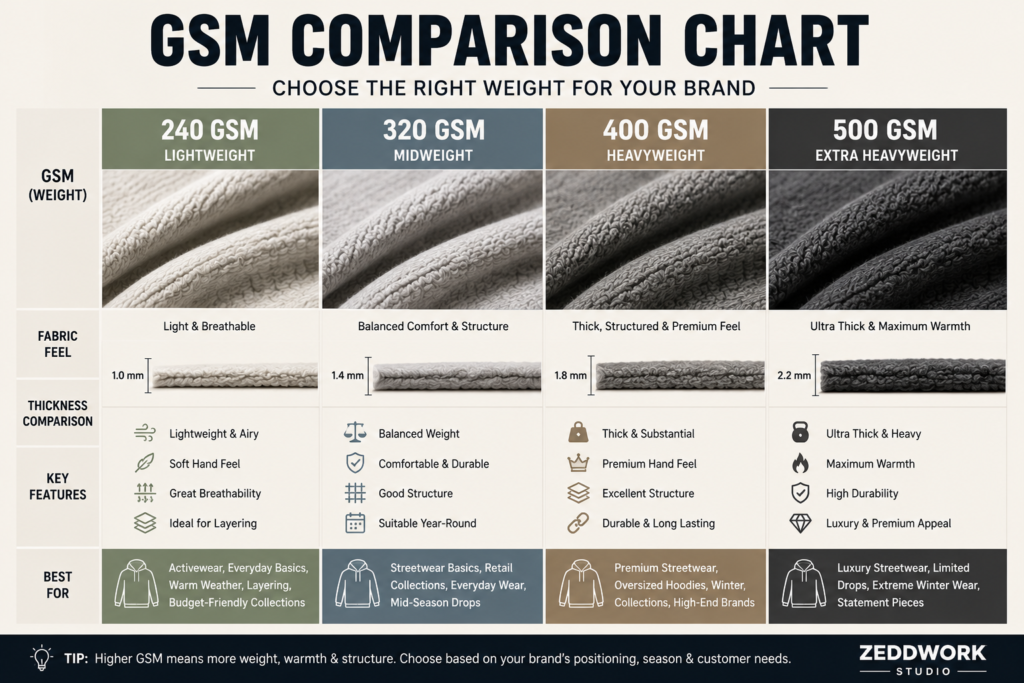
Here is a general breakdown of a hoodie GSM chart:
| Fabric Weight | Category | Typical Application |
|---|---|---|
| 180–240 GSM | Lightweight | Summer hoodies, layering pieces |
| 250–300 GSM | Midweight | Everyday sweatshirts and casual hoodies |
| 300–330 GSM | Medium-heavy | Premium casualwear |
| 340–360 GSM | Heavyweight | Premium streetwear and structured hoodies |
| 380–450 GSM | Extra heavyweight | Oversized luxury streetwear and winter collections |
These categories are indicative rather than fixed industry standards. The actual feel and performance also depend on yarn composition, knitting structure, brushing and finishing.
For brands looking to develop premium heavyweight hoodies, 340–360 GSM is a versatile fabric-weight range.
Also Read: Heavyweight vs Lightweight Hoodies: Which Is Better for Your Brand?
2. Why Are 340–360 GSM Hoodies Popular Among Premium Clothing Brands?
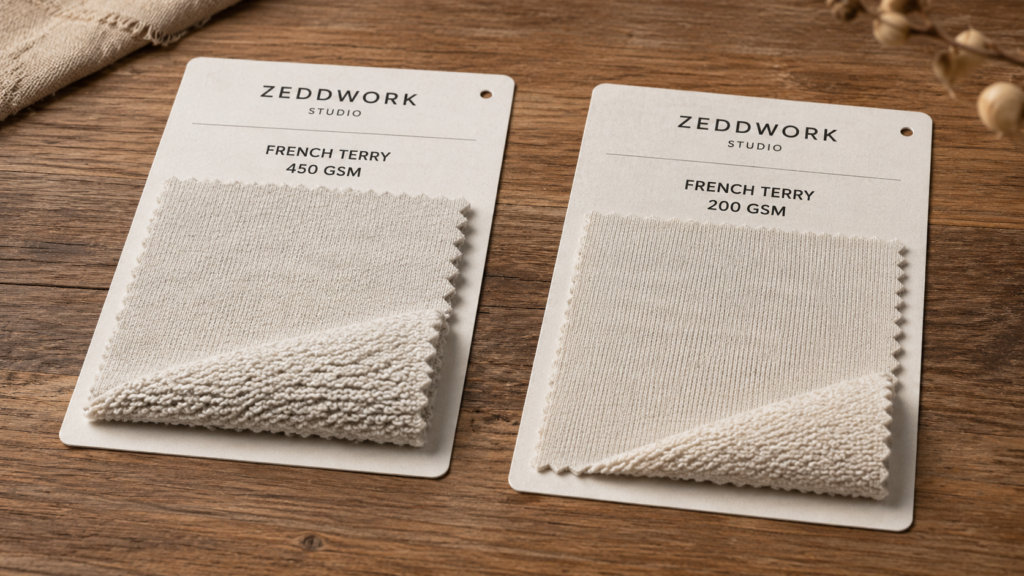
The growing demand for premium basics and elevated streetwear has made heavyweight hoodies an important category for contemporary clothing labels.
Unlike lighter sweatshirts, heavyweight hoodies offer a more substantial silhouette and a distinctive tactile experience.
Here is why brands choose this fabric weight.
Better Structure and Shape Retention
Heavyweight fleece provides a more structured appearance, making it suitable for oversized, relaxed and boxy hoodie silhouettes.
The additional fabric weight helps create a substantial drape and a more defined garment shape.
Premium Hand Feel
Customers often associate fabric density, softness and weight with product quality.
A well-developed 340–360 GSM hoodie offers a substantial hand feel without necessarily becoming excessively bulky.
The right combination of cotton, polyester and finishing techniques can create a soft interior with a smooth, premium exterior.
Suitable for Streetwear Collections
Heavyweight hoodies work particularly well for:
- Oversized streetwear hoodies
- Boxy-fit pullover hoodies
- Minimalist premium basics
- Graphic printed sweatshirts
- Embroidered statement hoodies
- Private-label winter collections
- Matching hoodie and jogger sets
Greater Design Flexibility
A substantial fleece base provides a suitable surface for several customization techniques, including embroidery, appliqué, screen printing, rhinestone detailing and other embellishments.
For design-led brands, this creates more opportunities to develop distinctive products rather than relying on basic silhouettes.
3. Choosing the Right Fabric for Heavyweight Hoodie Manufacturing

GSM is only one part of fabric selection. Two fabrics with identical GSM measurements can feel completely different depending on their yarn composition, knitting construction and finishing.
For private-label hoodie production, selecting the right fleece is essential.
Cotton Fleece
Cotton fleece is widely used for premium sweatshirts and hoodies.
It offers a natural hand feel, good breathability and a comfortable wearing experience.
For brands positioning themselves around premium everyday essentials, cotton-rich fleece can be an excellent choice.
Cotton-Polyester Fleece
Cotton-polyester blends combine the comfort of cotton with the functional properties of polyester.
Depending on the blend ratio and fabric construction, these fabrics can offer:
- Improved dimensional stability
- Reduced tendency to shrink compared with some 100% cotton alternatives
- Good shape retention
- Consistent fabric performance
- A balanced combination of softness and durability
The exact performance depends on the yarn, knitting and finishing processes.
Brushed Fleece
Brushed fleece undergoes a mechanical finishing process that raises fibres on the inner surface of the fabric.
This creates a soft, slightly fuzzy interior that improves the garment’s warmth and comfort.
Brushed fleece is particularly suitable for winter hoodies and premium casualwear.
French Terry
French terry features characteristic looped yarns on its reverse side instead of a fully brushed interior.
It provides a more breathable and less fuzzy alternative to brushed fleece.
Brands looking to develop heavyweight hoodies for transitional seasons or year-round collections may consider French terry, depending on the desired hand feel and construction.
Our approach: At Zeddwork Studio, fabric selection begins with the intended garment design, target customer, fit and end-use. We help brands evaluate fabric composition, weight, surface texture and finishing before moving into production.
Also Read: French Terry vs Fleece: Which Fabric Should You Choose for Premium Hoodies?
4. Important Construction Details of a Premium Heavyweight Hoodie
A premium hoodie is defined by more than its fabric weight.
The construction details determine how the garment fits, holds its shape and performs after repeated wear and washing.
When developing a 340–360 GSM hoodie, we pay attention to the following elements.

Fabric Composition and Consistency
Fabric weight and composition should be checked against the approved specifications.
Consistency between production lots is important for maintaining the same hand feel, colour and garment performance across a collection.
Ribbed Cuffs and Hem
Ribbing plays an important role in the overall construction of a hoodie.
The cuffs and waistband should provide suitable stretch and recovery while maintaining a clean finish.
Rib composition, GSM and construction should complement the main fleece fabric.
Hood Construction
The hood is one of the most visually distinctive elements of a hoodie.
Depending on the design, brands can choose:
- Single-layer hood construction
- Double-layer hood construction
- Panelled hood construction
- Drawstring-adjustable hoods
- Oversized structured hoods
The hood should maintain its intended shape without becoming excessively heavy or uncomfortable.
Shoulder and Sleeve Construction
Dropped shoulders, raglan sleeves and set-in sleeves create different visual identities.
For oversized streetwear, dropped shoulders and wider sleeves are common design choices.
For a cleaner, more fitted silhouette, set-in sleeves may be more appropriate.
Stitching and Seam Finishing
Seam construction affects both appearance and durability.
Common construction details include:
- Overlock stitching
- Coverstitch finishing
- Twin-needle stitching
- Reinforced stress points
- Clean neckline and hood attachment
- Consistent seam allowances
The appropriate stitch construction depends on the garment design and approved technical specifications.
Drawstrings, Eyelets and Trims
Small details can significantly influence the final appearance of a premium hoodie.
Brands can customize:
- Cotton or polyester drawstrings
- Metal or reinforced eyelets
- Custom zipper pulls
- Branded cord ends
- Woven labels
- Embroidered labels
- Custom patches
These elements help create a consistent brand identity across the collection.
5. Private Label Heavyweight Hoodie Manufacturing: Customization Possibilities
Private-label manufacturing allows clothing brands to develop products that reflect their own design language rather than purchasing generic ready-made garments.
At Zeddwork Studio, we support brands in translating their creative direction into production-ready apparel.
Our heavyweight hoodie customization capabilities include:
Custom Fits and Silhouettes
Brands can develop their preferred hoodie silhouette, including:
- Oversized hoodies
- Relaxed-fit hoodies
- Boxy-fit hoodies
- Cropped women’s hoodies
- Drop-shoulder hoodies
- Classic regular-fit hoodies
- Full-zip hoodies
- Quarter-zip fleece styles
Fit specifications can be developed through measurements, reference samples and technical packs.
Custom Colours and Fabric Dyeing
Colour is an important part of private-label product development.
Brands can explore custom fabric colours based on Pantone references, approved swatches or physical colour standards.
Depending on fabric availability and dyeing requirements, custom shades can be developed for coordinated collections.
Embroidery
Embroidery adds texture and dimension to heavyweight fleece.
Popular applications include:
- Minimal chest logos
- Large back embroidery
- Sleeve embroidery
- Hood embroidery
- Chain-stitch lettering
- Appliqué combined with embroidery
- Custom embroidered artwork
Both machine embroidery and selected hand-embellishment techniques can be incorporated depending on the design.
Custom Printing
Printing allows brands to introduce graphics, typography and artwork into their hoodie collections.
Available techniques can include:
- Screen printing
- DTG printing
- Pigment printing
- Custom graphic placements
- Multi-colour artwork
The printing method is selected according to the fabric composition, artwork complexity, desired finish and production requirements.
Appliqué and Surface Embellishments
For brands developing statement streetwear or limited-edition collections, surface embellishment offers additional creative possibilities.
Options include:
- Layered fabric appliqué
- Rhinestone artwork
- Beadwork
- Stud embellishments
- Decorative patches
- Mixed-technique embroidery
- Custom trims
Each technique requires appropriate development and testing to ensure it works with the fleece surface and intended garment use.
6. Private Label Branding and Packaging
A private-label hoodie should feel like your brand at every touchpoint.
Beyond manufacturing the garment, branding elements help establish a consistent identity across your collection.
Depending on the product requirements, private-label hoodie development can include:
Main labels: Custom woven or printed neck labels featuring your brand identity.
Size labels: Consistent sizing information for your target market.
Care labels: Fabric composition, washing instructions and relevant product information.
Hangtags: Custom-designed tags communicating brand identity and product details.
Packaging: Individual polybags, custom packaging and export-ready packing configurations.
Brand-specific trims: Custom drawstrings, zipper pulls, patches and other distinctive garment components.
These details help transform a manufactured hoodie into a finished private-label product ready for your brand’s distribution channels.
7. The Manufacturing Process: From Concept to Finished Hoodie
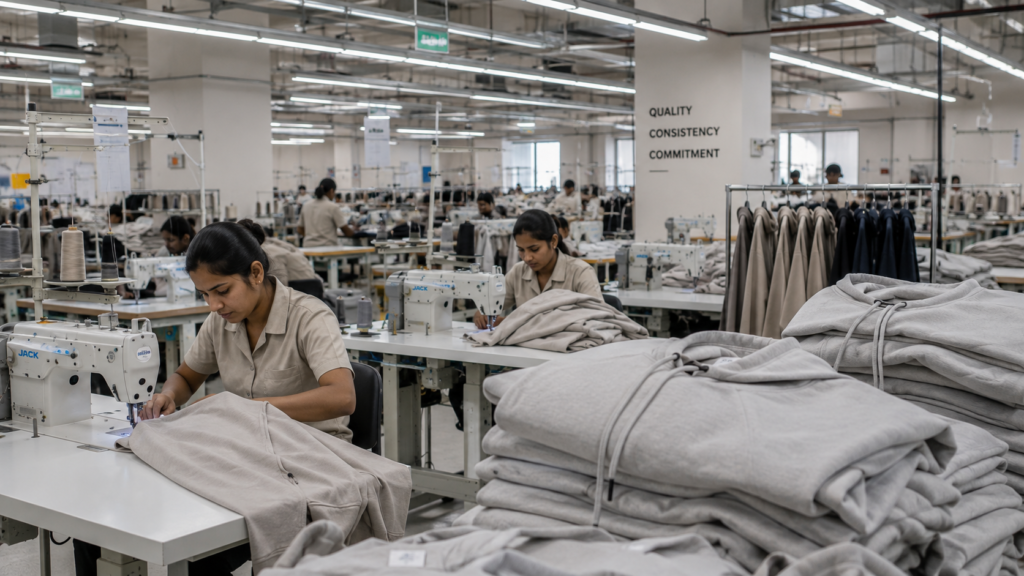
Developing a premium heavyweight hoodie involves several coordinated stages.
A structured development process helps minimize production inconsistencies and ensures the final garment reflects the approved design.
At Zeddwork Studio, our process typically includes the following stages.
Step 1: Design Brief and Product Requirements
We begin by understanding your brand, collection direction and product requirements.
This includes:
- Hoodie design references
- Target fabric weight
- Fabric composition
- Desired fit and measurements
- Colour requirements
- Printing or embroidery details
- Branding and packaging specifications
- Estimated production quantities
If you already have a technical pack, our team can review it before proceeding.
Step 2: Fabric Sourcing and Development
We identify suitable fleece options based on the required GSM, composition, texture, colour and performance expectations.
Fabric availability and specifications are reviewed before sample development.
Step 3: Technical Development
Our team works on the technical aspects of the garment, including measurement specifications, construction details, stitching, trims and artwork placements.
Where required, digital design and 3D sampling can support the development process.
Step 4: Sample Development
A physical sample is developed to evaluate the actual garment.
This stage allows the brand to review:
- Fabric weight and hand feel
- Garment measurements
- Fit and proportions
- Stitching and construction
- Colour accuracy
- Embroidery and printing quality
- Trims and finishing
Feedback is incorporated into the development process before production approval.
Step 5: Bulk Manufacturing
Once the sample and specifications are approved, the garment moves into production.
Fabric preparation, cutting, stitching, printing, embroidery and finishing are coordinated according to the product requirements.
Step 6: Quality Control and Finishing
Quality checks are carried out at relevant production stages.
Depending on the agreed specifications, checks can include:
- Fabric weight and composition verification
- Measurement inspection
- Stitching and seam inspection
- Print and embroidery inspection
- Colour consistency
- Garment finishing
- Label and packaging verification
Step 7: Packing and Export Coordination
Finished garments are checked, packed and prepared according to the agreed packing specifications.
Our team coordinates the export-oriented manufacturing and shipment process for international clients.
8. Quality Checks Every Brand Should Consider Before Approving Heavyweight Hoodies
A 340–360 GSM specification does not automatically guarantee a premium-quality hoodie.
Brands should evaluate the complete fabric and garment performance before approving bulk production.
Here are some important quality parameters.
| Quality Parameter | What to Evaluate |
|---|---|
| GSM | Verify fabric weight against the approved specification |
| Fabric Composition | Confirm fibre composition |
| Shrinkage | Evaluate dimensional changes after washing |
| Pilling | Check surface fibre formation |
| Colourfastness | Evaluate resistance to colour loss |
| Seam Strength | Inspect stitching and seam durability |
| Rib Recovery | Check stretch and recovery at cuffs and hem |
| Measurement Accuracy | Compare garment measurements with the tech pack |
| Print Durability | Check print adhesion and appearance after washing |
| Embroidery Quality | Inspect stitch density, backing and finishing |
Testing requirements should be established according to the brand’s product specifications and target market.
For international brands, having clear quality standards and an approved reference sample is particularly important for maintaining consistency across repeat orders.
9. How to Choose the Right Heavyweight Hoodie Manufacturer in India
Selecting a manufacturing partner is one of the most important decisions for a private-label clothing brand.
A suitable manufacturer should understand both the technical and creative aspects of product development.
Before finalizing a manufacturing partnership, consider these factors.
1. Fabric Sourcing Expertise
Your manufacturing partner should understand different fleece constructions, fibre compositions, fabric weights and finishing options.
The ability to source suitable fabric is essential for achieving the intended garment quality.
2. Customization Capabilities
Look for a manufacturer who can support your design requirements, including embroidery, printing, appliqué, trims and private-label branding.
This is especially important for brands building distinctive collections.
3. Technical Development Support
A manufacturer should be able to work with technical packs, measurements, construction specifications and physical reference samples.
Technical understanding helps bridge the gap between a design concept and a production-ready garment.
4. Sampling and Quality Control
Sampling should be treated as an essential development stage rather than a formality.
A reliable manufacturing partner should have a clear process for sample approval, production specifications and quality checks.
5. Production Scalability
As a clothing brand grows, its manufacturing requirements may evolve.
Look for a partner who can support product development, consistent production and coordinated sourcing as your business expands.
6. Transparent Communication
Clear communication around fabric availability, development timelines, production requirements, pricing and quality standards is essential for long-term manufacturing partnerships.
10. Why Choose Zeddwork Studio for Heavyweight Hoodie Manufacturing?
Zeddwork Studio is an India-based apparel design, sourcing and manufacturing partner working with global fashion brands.
We combine technical garment development, fabric sourcing, craftsmanship and coordinated production to help brands bring their collections to life.
Our approach goes beyond garment manufacturing. We work as an extension of your product development and sourcing team.
Fabric and Material Expertise
We source and develop cotton, cotton-blend and other suitable knit fabrics, including fleece, French terry, jersey, rib and interlock, based on product requirements.
Design and Technical Support
From technical pack development and measurement specifications to graphic placement and digital sampling, we support brands throughout product development.
Customization and Craftsmanship
Our capabilities include screen printing, DTG printing, machine embroidery, hand embellishment, appliqué, beading and other customization techniques.
Integrated Manufacturing Coordination
We coordinate sourcing, product development, production, finishing, quality checks and export-oriented logistics through a connected manufacturing system.
A Partnership Built for Growth
Whether you are introducing your first premium hoodie collection or expanding an established streetwear line, we focus on building a manufacturing relationship around consistency, craftsmanship and scalability.
Build Your Next Heavyweight Hoodie Collection with Zeddwork Studio
A premium heavyweight hoodie is the result of thoughtful material selection, precise construction and consistent finishing.
For private-label clothing brands, the right manufacturing partner makes it possible to translate a creative concept into a finished product without compromising the details that define your brand.
At Zeddwork Studio, we bring together India’s textile sourcing expertise, garment manufacturing capabilities and craftsmanship to support brands building premium apparel collections for global markets.
Share your designs and product requirements with our team.
Contact Zeddwork Studio
Website: https://zeddworkstudio.com/
Email: info@zeddworkstudio.com
Let’s build your next collection with precision, craftsmanship and consistency.