For fashion brands in the USA, UK and Australia planning ahead for Autumn/Winter 2028/29
If you are a buyer, product developer or founder in New York, London or Sydney, A/W 2028/29 is closer than it feels. Development calendars for a season this far out begin with direction-setting, fabric exploration and partner selection. The brands that move early get the best of the mills, the sampling slots and the craft capacity.
One of the most useful starting points this year is C2 Fashion Studio’s Core Macro Vision for the season, Human Equilibrium, published by trend forecaster Cristina Capucci. Read closely, it reads like a brief for what Indian manufacturing does best. This post connects the two.
The season in one idea: progress that stays human
C2 Fashion Studio describes a consumer who has stopped reacting to individual disruptions and is learning to live inside constant change. The desire for progress remains, but it comes with a need for orientation, emotional continuity and more control over how technology enters daily life.
For product teams, the forecast points to a few clear shifts:
- Technology becomes quiet infrastructure. Performance moves into the construction of the product: materials that regulate temperature, respond to conditions or adapt to movement, without looking technical.
- Resilience means coherence, not recovery. Protection becomes softer and less literal, expressed through enveloping proportions, intelligent layering, tactile density, modularity and thermal performance.
- Longevity is emotional. People keep what they feel attached to, so texture, ageing, memory and sensory recognition become part of product value.
- Nature and innovation converge. Bio-derived developments, advanced cellulosics, compact tactile knits, protective wool structures, lightweight insulation and surfaces that look grown or mineralised take centre stage.
Where India fits
1. Tactile, textural, handcrafted depth
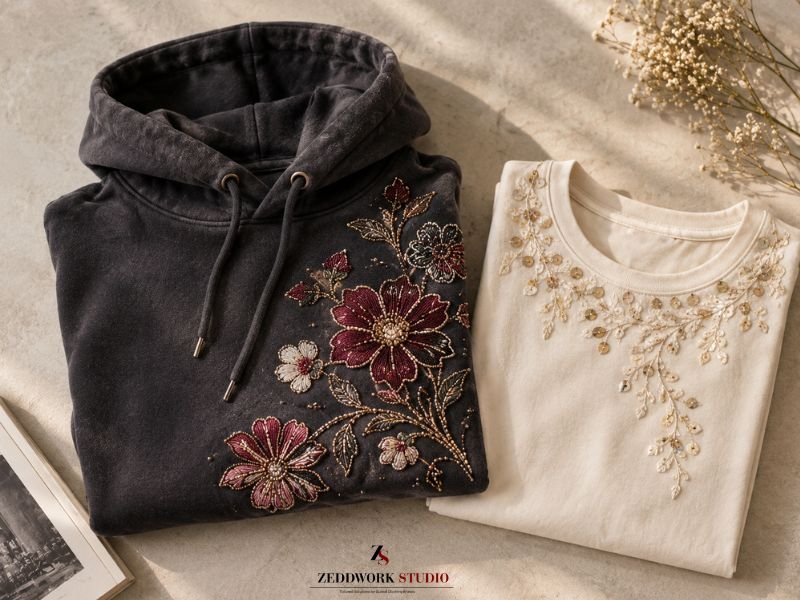
If comfort and touch become more valuable as life becomes more digital, a partner with deep hand-skills is a real advantage. India’s craft ecosystem covers handloom weaving, hand and machine embroidery, block and screen printing, natural dyeing, quilting, hand-knitting and surface manipulation. These techniques give garments the tactile density and sense of history the season calls for, and they suit pieces designed to age well rather than look new for a single season.
2. Knitwear, wool and cold-weather construction
Autumn/Winter is about warmth, layering and protection. India has established capability in knitwear, woven outerwear, wool and wool-blend fabrics, quilted and padded pieces, and cut-and-sew tailoring. For compact tactile knits, protective wool structures and modular layering, you can find specialists who handle yarn development through to finished garment.
3. Cellulosic and renewable fibre strength
The report highlights advanced cellulosics and renewable resources. India is a major producer and processor of cotton and a wide range of plant-based fibres, with growing activity in viscose, lyocell-type cellulosics, linen, hemp and organic cotton. That raw material base supports bio-derived and low-impact development, from fabric sourcing to finishing.
4. Colour and finishing expertise
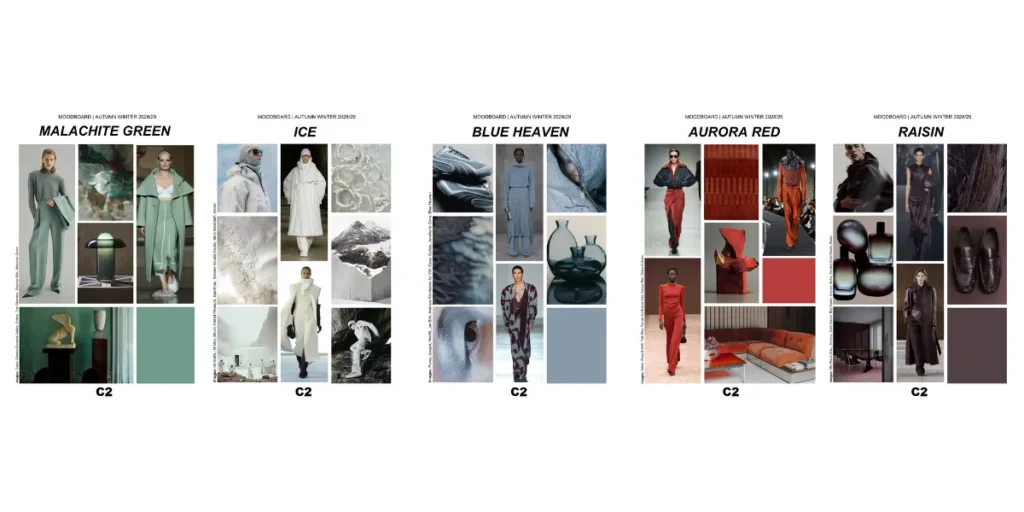
C2’s palette moves across earth-inflected warmth, living greens and cold atmospheric blues. The five key shades are Blue Heaven (Pantone 17-4023 TCX), Ice (11-4803 TCX), Aurora Red (18-1550 TCX), Malachite Green (16-5917 TCX) and Raisin (19-1606 TCX). Indian dye houses and print units have long experience in rich, layered colour, from mineral and oxidised earth tones to deep jewel greens, and in washes, overdyes and garment dyeing that create depth. Ask partners for lab dips against Pantone references early, and request natural or low-impact dye options where relevant.
5. Flexibility for modular and engineered design
Modularity, intelligent layering and structural detail demand technical pattern-making and careful construction. Strong Indian factories now offer in-house design and pattern rooms, sampling teams and technical development, so your concept can be turned into a workable, repeatable product.
What to look for in a development partner
When searching for a partner for A/W 2028/29, go beyond price and ask:
- Do they develop, or only produce? Look for design, fabric and trim sourcing, pattern making and sampling under one roof.
- Can they work to your trend direction? Share a mood board, palette and fabric brief, and see how they respond with swatches and proposals.
- What is their material range? Ask about cellulosics, wool, recycled and organic options, plus traceability.
- How transparent is their compliance? Request audit reports, social and environmental certifications, and clear subcontracting policies.
- How do they handle minimums and flexibility? Newer and mid-sized brands in the US, UK and Australia often need smaller runs and quicker repeats.
- Is communication easy? Time-zone overlap, English fluency and clear sampling timelines matter more than they seem.
A sensible timeline
Work backwards from your delivery window. Early in development, finalise direction and shortlist partners. Then move through fabric and yarn exploration, first prototypes, fit and refinement rounds, and pre-production samples before bulk. Building in time for colour approvals and craft-intensive techniques avoids last-minute compromise. Speak to prospective partners well ahead of when you need samples, since good capacity fills early.
The bottom line
Human Equilibrium suggests a season where the best products feel reassuring, tactile and quietly intelligent, rather than loudly innovative. India’s combination of craft heritage, knitwear and outerwear capability, fibre depth and growing technical development offers brands in the USA, UK and Australia a practical way to deliver that vision.
If you are planning A/W 2028/29 and want a development partner who can turn trend direction into a finished collection, now is the time to start the conversation.
Zeddwork Studio is a design-led manufacturing and export partner from India, working primarily in women’s, men’s, and kids’ apparel, providing design assistance, sample development, private-label production, and export documentation – we help international fashion brands develop and successfully launch their collections.
Trend direction referenced in this post is drawn from C2 Fashion Studio’s Human Equilibrium report by Cristina Capucci, published August 31, 2026. Download the report here.